
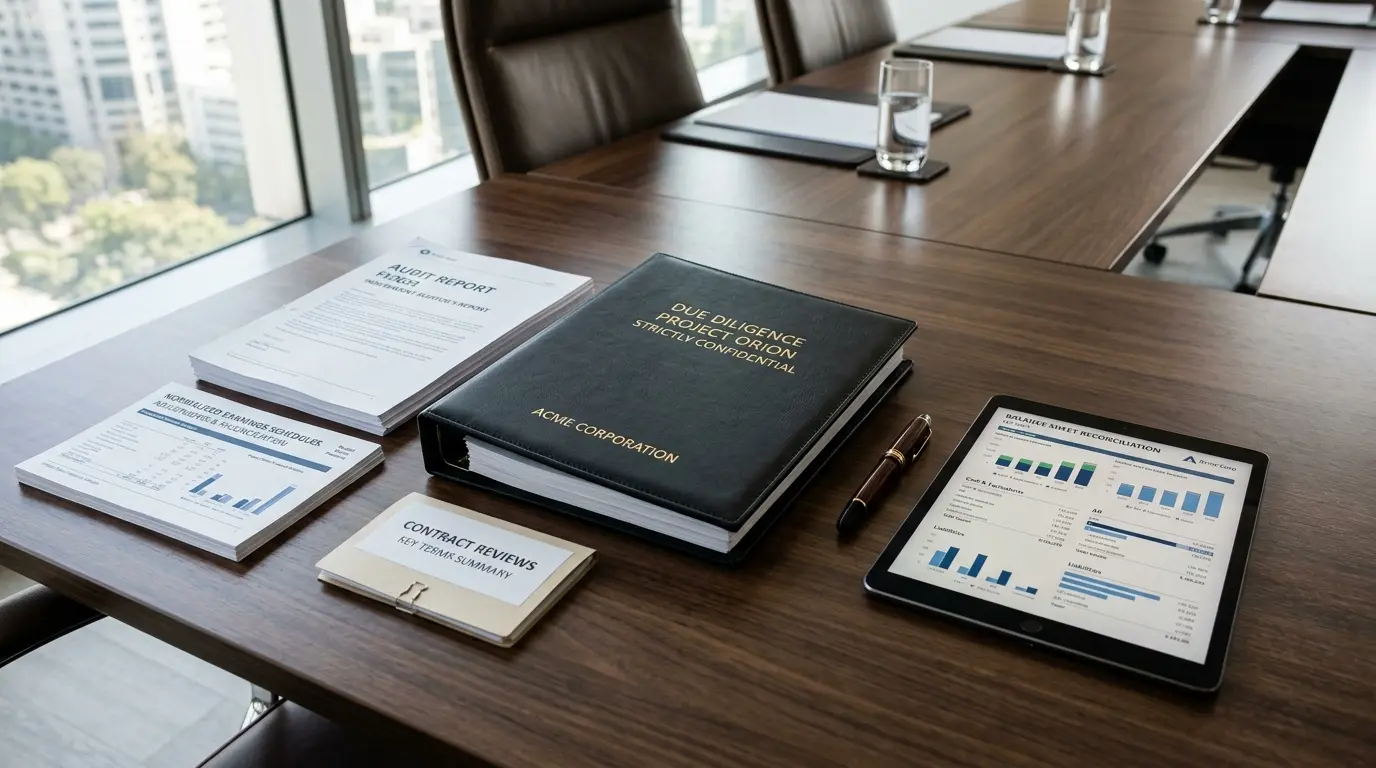
Is your business ready to sell?
Most business owners do not start a company with the intension to sell. They start with an idea, a customer need, a particular skill or perhaps the determination to build something of their own. Over time, the business becomes more than a source of income, it becomes part of their identity, their family’s security and, in many cases, their most valuable asset.
Then, at some point, the question arises: Should I sell?
The reason may be retirement or a desire to step away from the daily pressures of running the business. You may want to pursue a new venture, relocate, reduce your personal risk or release some of the wealth tied up in the company. The business may need a larger partner to fund its next stage of growth, or you may have been approached by a competitor, investor or corporate group as part of a merger or acquisition.
Sometimes the decision is not entirely voluntary. Health concerns, partnership disputes, succession difficulties, financial pressure or changes in the market may create a need to sell sooner than expected.
Whatever the reason, one principle remains the same: the best time to prepare your business for sale is before you need to sell it.
A business that is prepared can enter the market from a position of strength. A business that is rushed into a sale will often find that the buyer controls the timetable, the questions and ultimately the price.
What are you actually selling?
As an owner, you may naturally think about the years of hard work invested in the business. You remember the difficult months, the personal guarantees, the late nights and the risks you took when nobody else believed in the idea.
These sacrifices are real, but unfortunately, a buyer does not pay for effort or history. A buyer pays for the future economic benefit that the business is expected to produce.
The buyer is effectively asking: “If I take ownership of this business, how much sustainable profit and cash flow can it generate, what risks will I inherit, and how dependent is its future success on the current owner?”
This is why a business can have substantial turnover, valuable equipment and a respected name, but still attract a disappointing offer. If the earnings are inconsistent, the financial information is unreliable or the business cannot operate without the owner, the buyer will see risk. Risk is usually reflected in a lower price, stricter sale conditions or part of the purchase consideration being delayed.
Why are you selling?
Your reason for selling matters because it influences how the transaction should be approached.
If you are retiring, your priorities may be achieving a clean exit, protecting employees and customers, and securing the wealth you have built. If you are moving into a new venture, you may want the sale completed quickly but still need sufficient capital and time to make the transition.
In a merger or acquisition, the buyer may want more than the financial results. They may be interested in your customer base, products, intellectual property, geographic footprint, specialist skills or operational capacity. In that case, you might remain involved for a period to help integrate the businesses.
You may also be looking for a strategic investor rather than a complete exit. Selling a minority or controlling interest could provide the capital needed to expand while allowing you to retain some ownership. However, bringing in a shareholder means sharing control, decision-making and future value.
Be clear about what you want from the transaction. Are you selling all the shares, selected assets, a division of the business or only a percentage? Do you want to leave immediately, or are you willing to remain for a transition period? Is your priority the highest possible price, certainty of payment, preserving the company culture or protecting the employees?
If these questions are not answered before negotiations begin, it becomes easy to focus on the headline price while overlooking the conditions attached to it.
What will a potential buyer look for?
Once a buyer expresses interest, the conversation quickly moves from the story of the business to the evidence supporting that story.
You may say that the business is profitable, has loyal customers and significant growth potential. The buyer will want to see financial records, customer information, contracts, cash flow forecasts and operating data that confirm those claims.
The first area of attention will usually be the quality of the financial information. Are the annual financial statements complete? Are the management accounts current? Do the accounting records reconcile to the bank accounts, tax submissions, debtors, creditors and inventory?
Untidy financial records create uncertainty. Even if there is an innocent explanation, unexplained balances, old suspense accounts or missing documents may cause a buyer to wonder what else has been overlooked.
A buyer is not necessarily expecting perfection. Most businesses have areas that require improvement. What matters is whether the information is reliable, the issues are understood and the owner can provide sensible explanations supported by evidence.
Is the profit real and sustainable?
The buyer will look beyond the profit reported in the financial statements and ask how much of it is likely to continue after the sale.
Perhaps the business received a once-off contract that significantly increased the current year’s profit. Maybe the owner does not draw a market-related salary, or family members work in the business without being fully remunerated. The company may pay personal expenses for the owner, or benefit from premises owned by a related party at a below-market rental.
These items need to be identified and adjusted to calculate the normalised or maintainable earnings of the business.
A potential buyer will also want to understand whether profits are improving, stable or declining. If sales have increased but gross margins are shrinking, the buyer will want to know why. It could be the result of discounting, higher input costs, inefficient production, poor project cost control or products being sold at the wrong price.
You should be able to explain where the business makes money, not only in total, but across its main products, services, customers, projects or divisions. Turnover is impressive, but buyers are far more interested in profitable turnover that can be converted into cash.
How secure is the revenue?
Imagine that your largest customer accounts for 45% of annual revenue and that the relationship depends almost entirely on your personal connection with the customer’s owner. To you, this may feel like a strong, long-standing relationship, but for the buyer, it represents customer concentration and owner-dependency risk.
The buyer will want to know how diversified the customer base is, whether customers purchase regularly and whether formal contracts are in place. They may examine customer retention, recurring revenue, order history, the sales pipeline and the reasons customers choose your business over competitors.
They will also look at how much future revenue is genuinely secured. A quotation is not the same as a confirmed order, and a promising conversation is not the same as a signed contract.
A strong business can clearly distinguish between contracted work, confirmed orders, probable opportunities and general prospects. This gives the buyer a realistic view of future revenue instead of an optimistic sales story that may not materialise.
Does the profit turn into cash?
One of the most important questions in any due diligence process is whether the business converts accounting profit into cash.
A company may report a healthy profit while experiencing continuous cash shortages. Customers might be taking too long to pay, inventory may be accumulating or suppliers may be funding the business through overdue accounts. The company may also rely on shareholder loans, overdrafts or the owner’s personal finances to meet monthly obligations.
A buyer will look closely at debtors, inventory, creditors and other working-capital requirements. Long-outstanding customer balances may not be fully recoverable. Slow-moving stock may not be worth the amount reflected in the accounts. Suppliers that have been stretched beyond their payment terms may need to be settled immediately after the sale.
These matters affect more than the perceived quality of the business. They can directly affect the purchase price. Many sale agreements include a required level of normal working capital at the transaction date. If the business is delivered with insufficient working capital, the amount ultimately paid to the seller may be reduced.
What is hiding in the balance sheet?
The balance sheet often receives less attention from business owners than the income statement, but it can reveal risks that materially affect a transaction.
A buyer will want to understand the amounts owed to or by directors and shareholders, the condition and ownership of assets, outstanding loans, guarantees, tax liabilities, employee obligations and any potential legal claims.
Old debtor or creditor balances, unreconciled loan accounts and assets that no longer exist should be dealt with before the sale process begins. Personal assets and expenses should be separated from the business, and related-party arrangements should be documented.
The buyer will also want confirmation that the business owns what it claims to own. This may include equipment, vehicles, trademarks, software, designs, customer databases or other intellectual property.
Finding these problems does not always stop a transaction. Discovering them late, however, can damage trust and give the buyer an opportunity to renegotiate.
Can the business operate without you?
This is often the most uncomfortable question for an owner.
If every significant customer calls you, every price requires your approval, every problem reaches your desk and all-important knowledge sits in your head, the buyer may not be acquiring a self-sustaining business. The buyer may effectively be acquiring a job that only you know how to perform.
A sale-ready business should have people, processes and systems that allow it to operate without constant owner intervention. This does not mean the owner must already have left. It means responsibilities are delegated, important procedures are documented, customer relationships are shared and management information is available to support decisions.
The stronger the management team and the more independently the business operates, the more confidence a buyer will have that performance can continue after the ownership changes.
Preparation protects value
Ideally, preparation should begin 12 to 24 months before the intended sale. This gives you time to clean up the accounting records, improve margins, strengthen cash flow, reduce customer concentration and show that the improvements are sustainable.
It also gives you time to prepare an organised due diligence file containing the financial statements, management accounts, forecasts, tax records, financing agreements, customer and supplier contracts, employee information, insurance schedules, asset registers and supporting operational data.
Preparing early does not commit you to selling. It simply gives you choices. A financially disciplined, well-managed business is valuable whether you sell it, bring in an investor, merge with another company or continue operating it yourself.
Before approaching a buyer, ask yourself three practical questions:
- Can I support the value I believe the business is worth?
- Can the business produce sustainable profit and cash flow without depending entirely on me?
- If I were the buyer, what would concern me?
The objective is not to create the appearance of a perfect business. It is to present a credible, transparent and well-managed one.
In closing
A buyer is far more likely to accept a weakness that has been identified, measured and supported by an improvement plan than a problem that emerges unexpectedly during due diligence.
Ultimately, buyers pay for confidence: confidence in the financial information, the people, the systems, the customer relationships and the future cash flows.
The stronger that confidence is, the better your opportunity to protect the value you have spent years building and to sell the business on terms that support whatever comes next. Are you ready to sell your business?

0 Comments